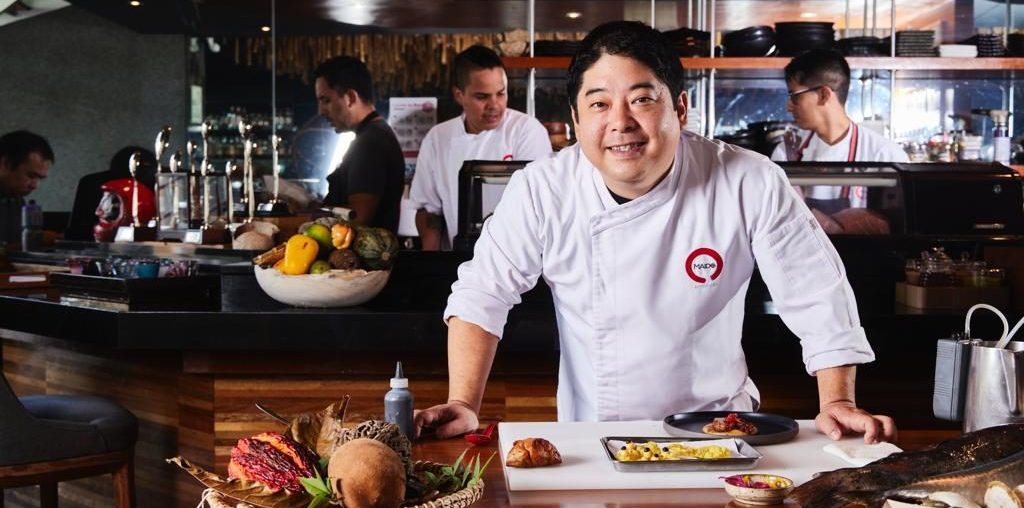
MICHA TSUMURA: “WHAT MAKES ME HAPPY? MAKING OTHERS HAPPY»
Maido is a space in which the chef of Japanese descent uses his memories, travels, research, and the local ingredients, to create.


Maido is a space in which the chef of Japanese descent uses his memories, travels, research, and the local ingredients, to create.
Words by Paola Miglio (IG @paola.miglio) | Cover Photo by Jimena Agois (IG @jimena.agois) Translation Alejandra Arrarte
Maido’s new menu is a journey through the intense and immense jungle. A jungle that we often fail to consider, but that continues to safeguard a vast biodiversity and culture, thanks to the over 51 ethnic groups who live harmoniously within it. In our Amazon, there are interchanges occurring daily, by the second; in there, across its high and low lands, the world’s pantry is kept. Mitsuharu Tsumura (Micha) knows this, and after spending a lot of time connecting with this area, he created a tasting menu years ago that reflects its richness. Nevertheless, there are still products to explore, and so he returns to the helm. This takes Tsumura further, across the country, with the desire to capture all of Peru with freedom and confidence. For his future tasting menus, for the dishes he is dreaming up. His is a space in which the chef of Japanese descent uses his childhood memories, research-based travels, and the local pantry to create, and can culminate his ideas in pure flavor. Because if there is something Micha loves, it is to eat well. This is clear from the get-go.
Now-a-days Mitsuharu Tsumura (Micha) feels freer in the kitchen. While he acknowledges that his foundation is Nikkei, he has realized over time that his menus offer dishes that, in one way or another, tell stories from all over Peru. The green tamalito from Catacaos, for example, and the beef cheek with ramen reduction, or the arroz con pato.
At the end of the day, Nikkei and criollo cuisine are connected: the Japanese colony that arrived in Peru was a big part of the development of this kind of cuisine. “Before, we would measure how much of the two cultures was being expressed in each dish in order to create something balanced, but it became too complicated for me. Little by little, our food became more Peruvian. The food at Maido can go even further using products from the coast or the Andes, for example, like a cabrito dim sum, or a stuffed rocoto pepper. When you close your eyes, you’re eating a Peruvian stew. There is, however, more involved work to be done with the products, a much more interesting background exploration,” he states.

Maido. Above, the Amazonian cone, and below, the braided sushi. Both are featured on the current tasting menu.

In no other country, as far as I know, have two cuisines so organically come together. So much so, that the combination of Peruvian and Japanese cuisine has its own name: Nikkei.
Tradition feeds creativity, and classic dishes have changed over time for a variety of reasons: by accident, by mistake, or by necessity. The recipes aren’t fixed, they have evolved through different preparations, cooking times, flavors, the introduction of new techniques, and, over the years, they become “normal” or quotidian, like eating a ceviche maki. Six years ago, when Yoshihiro Narisawa was in Peru, he came to Maido and I remember him saying to me “this food is unique, I have never tried anything like this before, and this is you. These are your flavors, this is your way of seeing food.” It’s not exactly Nikkei, I have a world that revolves around it.
Nikkei cuisine is a unique construct, a universe of its own; within it exist many parallel worlds that are very personal, particular ecosystems that were born and raised in each individual home.
And we are focusing more on Peru. The techniques will remain, as will the flavors that support my vision, like umami and miso, but I am liberating myself. This enables me to work with so many more ingredients, to take pieces of other cultures. For example, the Japanese can be nourished by the Chinese and Korean. We can use the knowledge about dumpling doughs and fillings in order to make things that are more delicious; using the collagen from chicken skin to yield more interesting textures. We must try to think beyond what already exists.
It’s very ambitious. It’s constantly challenging oneself.
I try to avoid looking at what there is, in order to imagine what could exist. With Segundo (Panduro, chief of creativity of I+D Maido), we think about things that we would like to eat, and what we can do to make these things super delicious. Its more edacious, more ravenous. And it becomes more fun. Nothing is perfect when it comes to cooking, everything can keep evolving. Otherwise, it would be boring.
You are one of the few chefs who’s enthusiasm for food is contagious and leaves one hungry.
I am a big eater. I am one of the ones who ate the most at school. In my class it was me and two others. I love to eat, I enjoy it. So, every time I eat, I think about how I could improve what I am eating. I salivate while I search for the ideal. For example, a hamburger, which I had on the menu and then forgot about. Now I’ve remembered and I’ll put it back on there. The most playful ideas come from the simplest things.

Tori. The love for providing better food led to the creation of Tori, which opened during the pandemic. It began as a dark kitchen, and then evolved into its own establishment.
To love eating is fundamental to creating tasty food, yes? And it was inherited?
From my mother, yes, she always cooked at home. But the idea of hospitality comes more from my father. He says that I’m always thinking about eating, while he would be happy with rice and a fried egg. I get my passion for doing what I love and for hospitality from him. He is 71 years old now, and always says he is going to retire, but he never does. He loves tending to people, being a guide. He is the person I admire most in the whole world, and the one I argue with the most.
Hospitality, serving people, feeding them well, this makes you happy?
I am happy making other people happy. That feeds my joy. I am very passionate, impulsive, and enthusiastic in what I do, sensitive. And the team that I work with lives it each day, and agrees. My family is first, every Sunday that I spend in Lima, I see my parents, there is nothing more important to me than that. Nothing. It is a rule in my life. When it comes to travel and the avalanche of things to come, I choose what to do. The things that move me, to be where I want to be. Taking over the world through restaurants is not it, I aim to be happy with that I am doing. I don’t know if I want more; I want to improve what I already have. As a chef, my goal is to continue to make more and more people happy, which is why Tori exists.
Tori, a rotisserie chicken concept, was born during the Pandemic.
I wanted to do something that could reach more people, the average bill is S/.28. We use products that are more expensive, not for the high margin, rather, to generate more volume so that more people can come. I wanted to democratize delicious food. To offer good quality for good cost, and that same desire drives my next projects. Maido operates at another frequency, and Tori isn’t just rotisserie chicken, it’s all of that which accompanies it. It is the chicken I want to eat: a tender breast that isn’t overly moist, and that hasn’t become too compact. Then, there’s the world of yakitori, with wantons, club sandwich tequeños, breaded cutlets, and more.

Tori. Rotisserie chicken and all that accompanies it: from satiating sandwiches with homemade sauces (now available in supermarkets), to tender breaded cutlets with unforgettably crispy exteriors.

Beyond Tori, you now have sauces you sell in various supermarkets, and Karai in Santiago, Chile. What else is coming?
Karai is now gaining more creative traction. We started off based on the old Maido menu, but now we have begun to find more local products; in Chile, there are lots of good products from the sea. For now, I only have one Project with Mario Castrellón (Maito, Panama), Mai Mai, which is a sort of izakaya on a rooftop that will have Caribbean flavors and a lot of grilled items. We want to make Tori massive, and take the sauces abroad: the bases we do, like the aji amarillo, which is the essence of Maido (and of the famous hydrogenated ceviche), so that everyone can enjoy them at home.
It is interesting to see how your cuisine is looking towards the future, involving different actors, and even giving importance to pertinent themes: quality products, the sea, and the Amazon.
We talk a lot about the ocean, but we don’t worry about what happens in the Amazon, and how dangerous the repercussions are for the continent and the planet if we continue to ignore it. We assume that the Amazon will behave like the ocean (which has the ability to regenerate more rapidly, as we saw during the pandemic). No. Illegal mining, logging, all of this affects it in an irreparable way. It is a global issue that can no longer afford to wait.
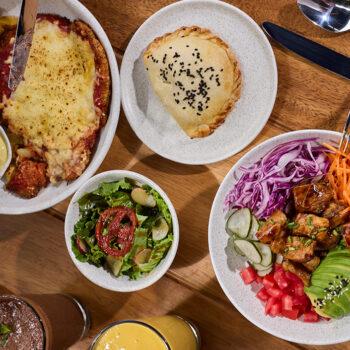
Conversamos con Freddy Jo, uno de los fundadores de Etcétera, cafetería de especialidad que anuncia nueva carta y revela la historia de cómo nació un lugar del que no quieres irte.
Leer más
Para celebrar el centenario del Copacabana Palace de Río de Janeiro, el equipo del Miraflores Park ha preparado cena, feijoada y brunch.
Leer más
Esta es la historia de la familia Huamán Lucas, creadores de Rocoto, Waman y Manya, tres conceptos con fuerte identidad nacional.
Leer más



Cada semana recibirás diversos artículos interesantes sobre gastronomía.
 Regresar


