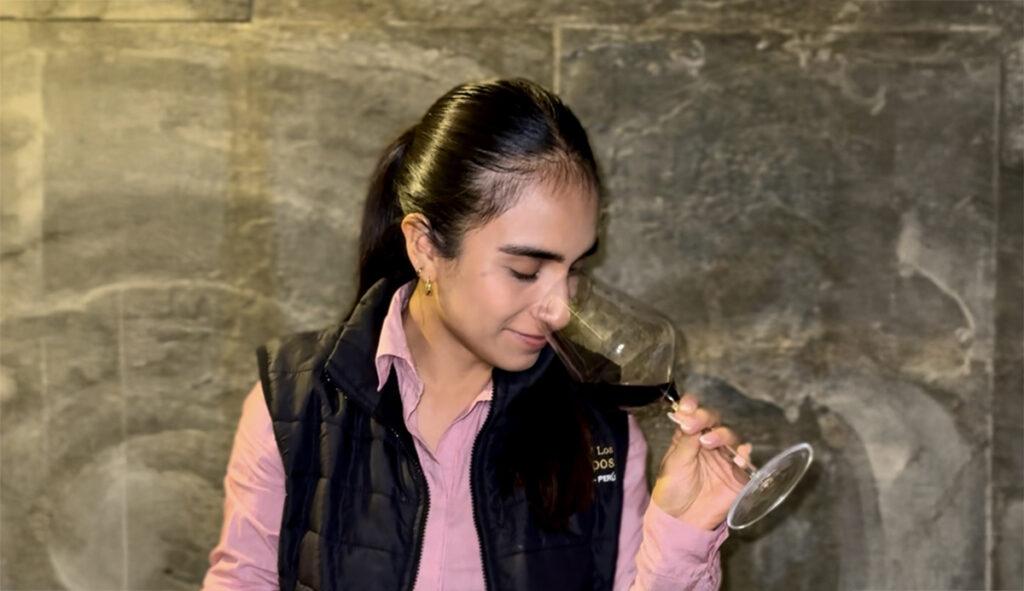
JOHANA FABIÁN: LA EVOLUCIÓN DE VIÑA D’ LOS CAMPOS
La ingeniera vitivinícola lidera la nueva etapa de Viña D’ Los Campos, fusionando tradición familiar, ciencia e innovación para impulsar los vinos de Cañete.


La ingeniera vitivinícola lidera la nueva etapa de Viña D’ Los Campos, fusionando tradición familiar, ciencia e innovación para impulsar los vinos de Cañete.
Escribe Soledad Marroquín M. (IG @sol_marroquín)
Hay un hilo invisible que conecta al productor con su tierra y que empieza a tejerse desde la infancia. Para Johana Fabián, ese vínculo se empezó a formar entre los cercos de las plantaciones de manzanas de su abuela en Cañete, que estaban bajo el cuidado de Johana y sus primos. También crecían naturalmente las primeras vides de uva Quebranta que conoció en su vida.
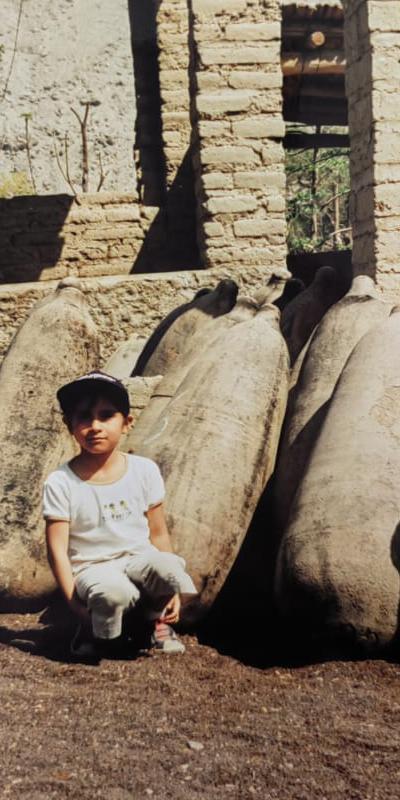
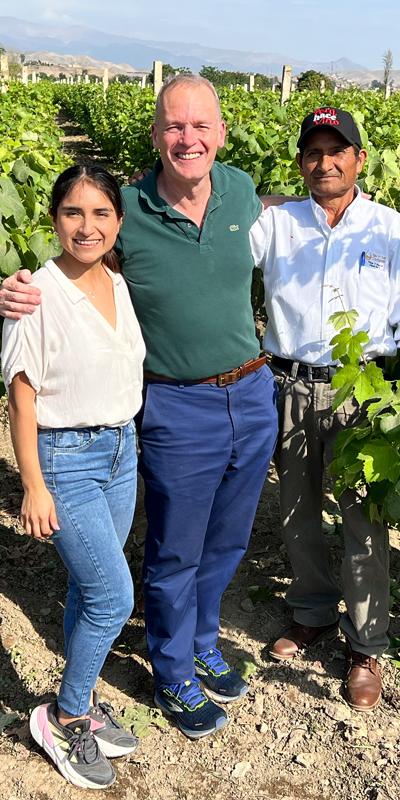
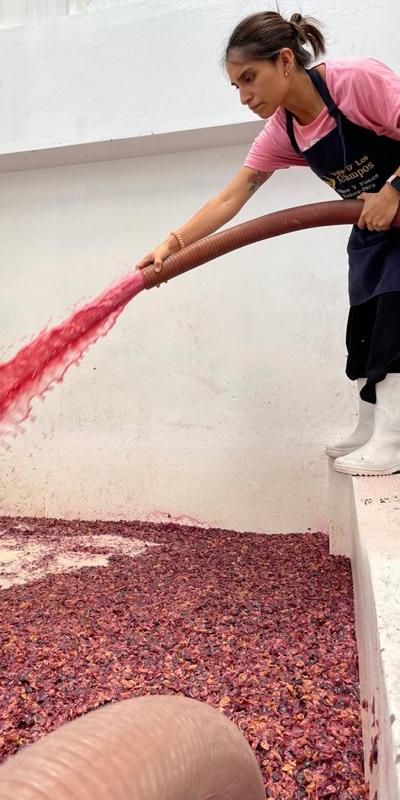
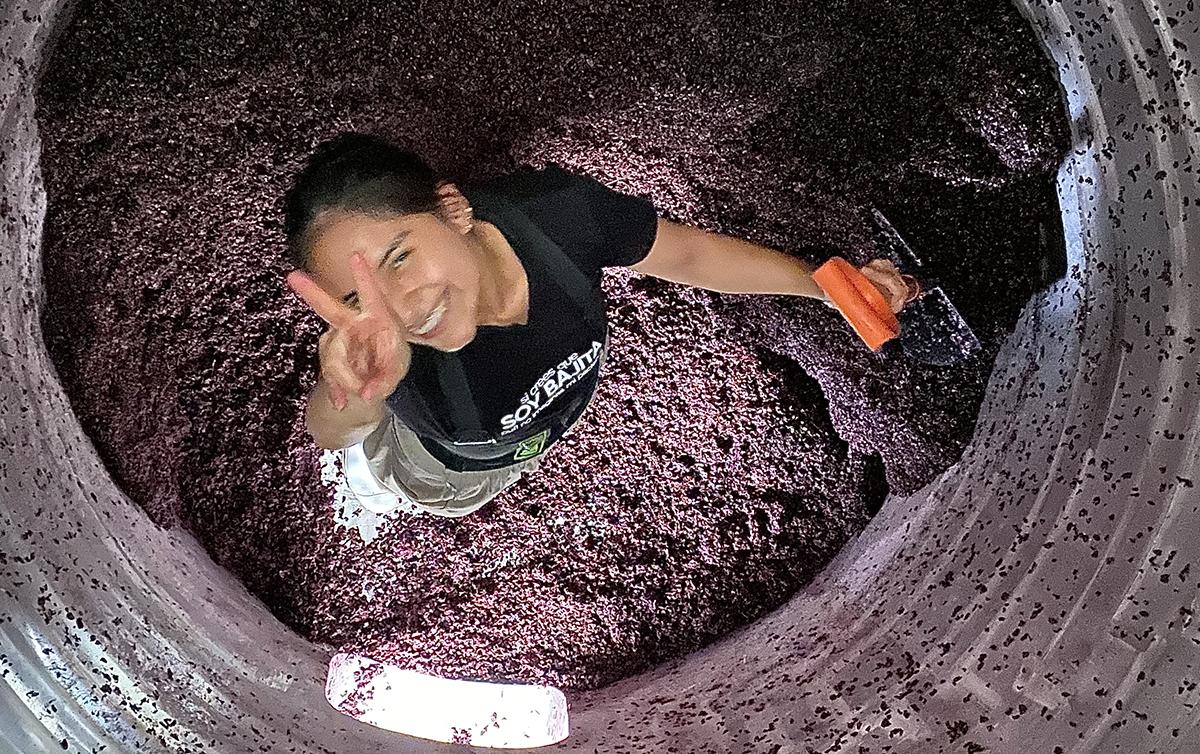
“De niña recuerdo muchísimo la bodega, sobre todo en temporada de vendimia”, nos cuenta Johana. Eran días de jornadas extenuantes y llenas de mucho movimiento donde ella tenía la tarea de llevar agua a los trabajadores. La casa familiar se llenaba de bandejas de madera por todas partes, rebosantes de uvas frescas recién cosechadas. Mientras su padre pisaba los racimos en ollas, María Campos, su madre, dirigía con energía el compás de la bodega. Ver esa pasión marcó su vida. Hoy, con orgullo, destaca que su madre sigue siendo el pilar y el corazón de la bodega Viña D’ Los Campos.
Los primeros pasos de Johana en el oficio fueron divertidos pero formativos. Para ganar el derecho de ir a la piscina por las tardes junto a sus primos, la tarea obligatoria era embotellar y encorchar al menos dos cajones de madera. “Hoy miro hacia atrás y me emociona ver cómo esos dos cajones se han transformado en producciones de miles de litros”, nos dice. En ese entorno, su gran fascinación siempre fue la uva Quebranta: “Llegaba a la bodega como si fuera miel pura, tan dulce que casi te atorabas al comerla. Hasta el día de hoy, ver su evolución me sigue fascinando; definitivamente es mi uva favorita”.
Con el tiempo, el camino de Johana hacia la profesionalización tomó una ruta técnica. Optó por estudiar ingeniería industrial en la Pontificia Universidad Católica del Perú (PUCP), buscando las herramientas necesarias para estructurar y gestionar una empresa. Sabía que sus padres eran visionarios y que el proyecto familiar tenía un potencial enorme, pero necesitaba orden. “Siempre me importó la parte técnica; quería entender el por qué detrás de cada aspecto del proceso. Hacer vino, además de ser un arte, es pura ciencia”, afirma con la seguridad de quien comprende que en esta industria el arraigo empírico debe respaldarse con certeza.
Así el año pasado decidió dar un paso decisivo y se especializó con un post título en Enología y Vitivinicultura en la Universidad de Chile, convirtiéndose en la primera de su familia en obtener este sustento científico. Este importante avance la llevó a proponer cambios en casa, donde sus padres siempre se mostraron abiertos a la innovación. Sumaron al enólogo asesor Rodrigo Avilés para incorporar una «tercera nariz» objetiva, implementaron un laboratorio propio y afinaron los procesos críticos. El trabajo en el viñedo cobró una nueva dimensión. De la mano de su padre, ingeniero agrónomo, empezaron a bajar los rendimientos para lograr mayor concentración y maduraciones lentas que no quemaran la baya. En el Fundo Santa Adela, ubicado en la zona baja de Nuevo Imperial y a solo 100 msnm, la influencia marina les regala blancos y rosados de una frescura vibrante, además de tintos más ligeros.
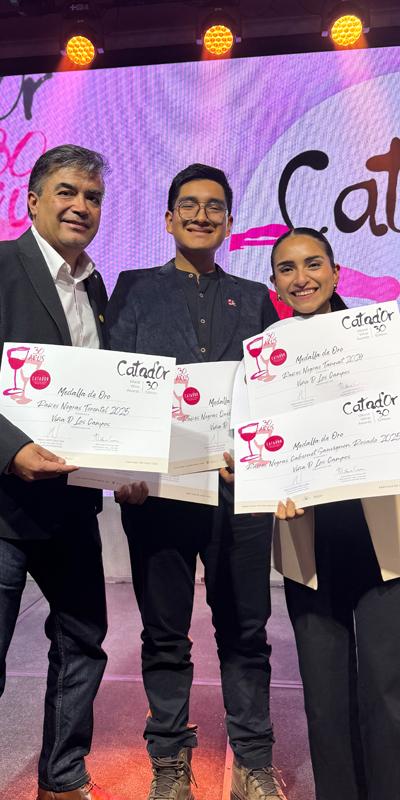
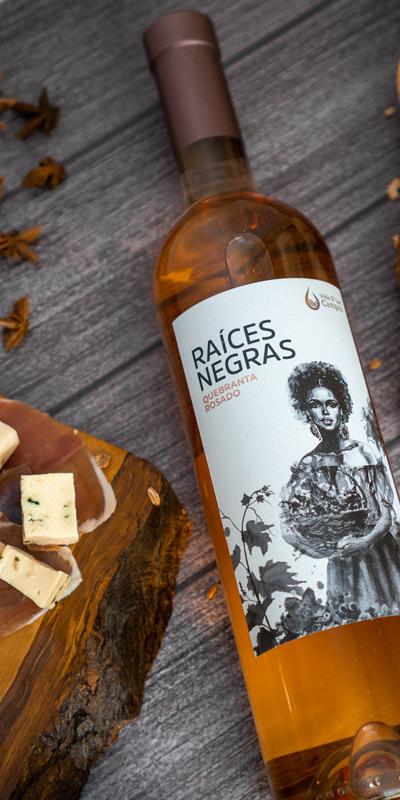
Entender el comportamiento de cepas complejas como la Cabernet Sauvignon en este clima les tomó más de cinco años de aprendizaje en nutrición y manejo hídrico, una experiencia que hoy capitalizan con éxito en la uva Tempranillo. Además, buscando mayor estructura y potencial de guarda, han expandido sus cultivos hacia Pacarán, una zona alta con mayor radiación solar ideal para el Tannat y el Cabernet. Johana cree firmemente que el verdadero valor radica en esa diversidad y cuando se refiere a su región nos dice con voz emocionada: “¡Qué lindo es para Cañete tener dos lugares tan puntuales que expresan características tan distintas!”. Para demostrarlo allí está su línea de vinos Raíces Negras que amalgama la herencia familiar, la intuición de la tierra, la precisión de la ciencia y que cada año logra más medallas y reconocimientos.
Words by Soledad Marroquín M. (IG @sol_marroquín)
There is an invisible thread that connects every producer to their land, one that begins to weave itself in childhood. For Johana Fabián, that bond was formed among the fences surrounding her grandmother’s apple orchards in Cañete, which Johana and her cousins helped care for. It was also there that she first encountered the Quebranta grapevines that would later shape her life.
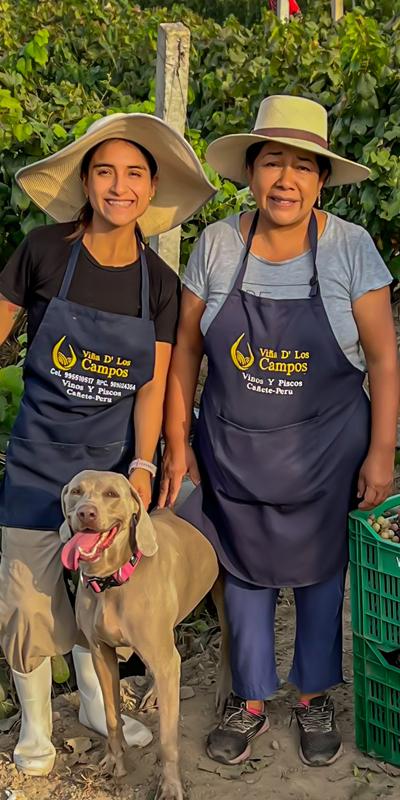
«As a child, I vividly remember the winery, especially during harvest season,» Johana tells us. Those were long, demanding days filled with constant activity, and her job was to bring water to the workers. The family home would fill with wooden trays overflowing with freshly harvested grapes. While her father crushed bunches of grapes in large pots, her mother, María Campos, energetically directed the rhythm of the winery. Witnessing that passion left a lasting mark on Johana. Today, she proudly says that her mother remains the pillar and heart of Viña D’ los Campos.
Johana’s first steps in the family business were both fun and formative. To earn the right to spend afternoons at the swimming pool with her cousins, she first had to bottle and cork at least two wooden crates of wine. «Today I look back and get emotional seeing how those two crates have become productions of thousands of liters,» she says. In that environment, the Quebranta grape always fascinated her: «It arrived at the winery like pure honey, so sweet you could almost choke eating it. Even today, watching its evolution continues to fascinate me; it is definitely my favorite grape.»
Over time, Johana’s path toward professionalization took a technical direction. She chose to study Industrial Engineering at the Pontifical Catholic University of Peru (PUCP), seeking the tools to structure and manage a business. She knew her parents were visionaries and that the family project held enormous potential, but it needed organization. «The technical side has always mattered to me; I wanted to understand the why behind every part of the process. Making wine, besides being an art, is pure science,» she says confidently, understanding that empirical tradition must be supported by scientific certainty.
Last year, she took a decisive step by completing a postgraduate specialization in Enology and Viticulture at the University of Chile, becoming the first member of her family to gain this scientific foundation. This milestone led her to propose changes at the winery, where her parents had always been open to innovation. They brought in consulting winemaker Rodrigo Avilés to provide an objective «third nose,» established their own laboratory, and refined critical production processes. Work in the vineyard also reached a new level. Together with her father, an agronomist, they reduced yields to achieve greater concentration and slower ripening without burning the berries. At Fundo Santa Adela, located in the lower area of Nuevo Imperial just 100 meters above sea level, the maritime influence produces vibrant, fresh whites and rosés, as well as lighter red wines.
Understanding the behavior of demanding varieties such as Cabernet Sauvignon under these conditions required more than five years of learning about nutrition and water management. Today, that knowledge has been successfully applied to Tempranillo. Seeking greater structure and aging potential, they have also expanded their vineyards to Pacarán, a higher-altitude area with stronger solar radiation that is ideal for Tannat and Cabernet. Johana firmly believes that true value lies in this diversity. Speaking about her region, she says with emotion: «How wonderful it is for Cañete to have two very specific places that express such different characteristics!» Her Raíces Negras wine line reflects that philosophy, blending family heritage, the intuition of the land, and scientific precision, earning more medals and recognition every year.
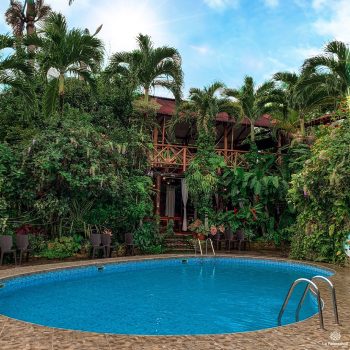
La familia Reátegui García conduce un oasis de relax y buena gastronomía en medio de la ciudad de Tarapoto. El hotel La Patarashca promete descanso y comodidad.
Leer más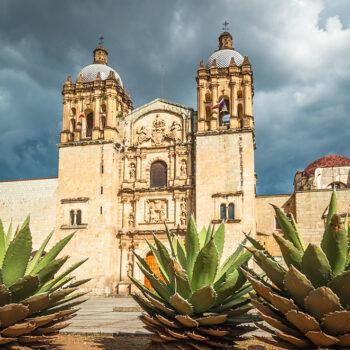
Cinco lugares que frecuenta y que permiten acercarse a distintas caras de una de las escenas gastronómicas más ricas de México.
Leer más
El chef de Osso nos recomendó sus restaurantes favoritos para comer bien en Lima, entre comida nikkei, italiana y criolla.
Leer más




Cada semana recibirás diversos artículos interesantes sobre gastronomía.
 Regresar


