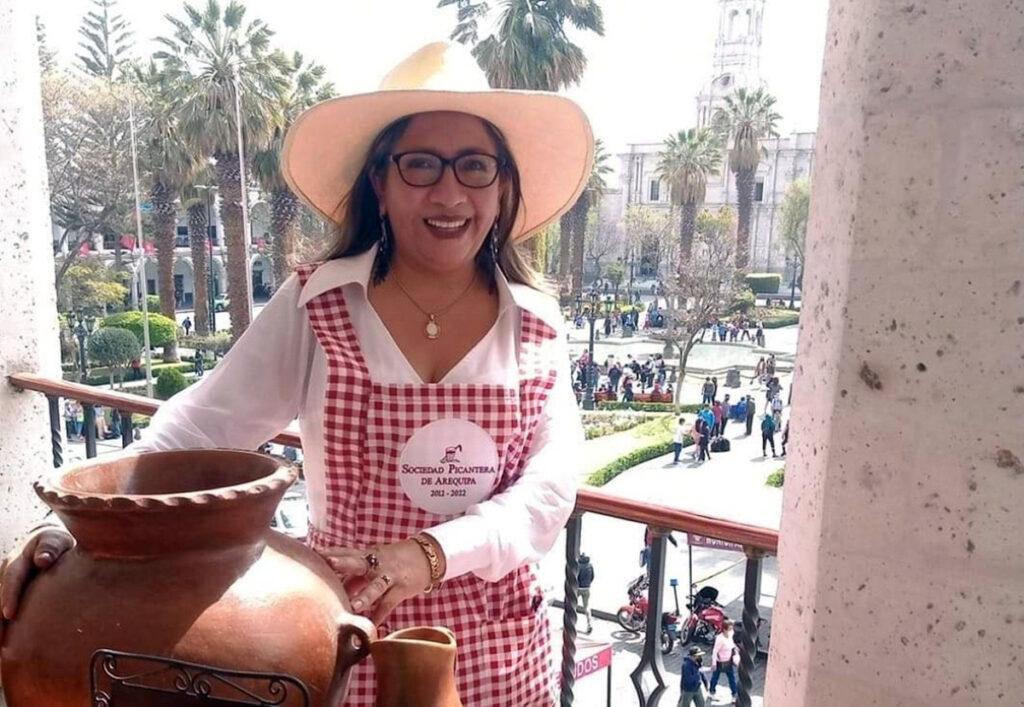
TATIANA VILLAVICENCIO: INNOVACIÓN AL ESTILO AREQUIPEÑO
Desde la picantería La Nieves, en Hunter, Tatiana defiende una cocina picantera con productos de temporada y los recursos que cada lugar le brinda.


Desde la picantería La Nieves, en Hunter, Tatiana defiende una cocina picantera con productos de temporada y los recursos que cada lugar le brinda.
Escribe María Elena Cornejo (IG @melenacornejo)
El primer recuerdo que Tatiana Villavicencio guarda en la memoria es el olor a chicha que salía de las chombas que su abuela Evarista Gutiérrez Postigo guardaba en su picantería La Evarista de Sachaca. A la niña Tatiana le gustaba meter la cabeza entera dentro de las tinajas para absorber los aromas. Como todas las niñas, hijas de picanteras, Tatiana abrió los ojos viendo el fuego casi perenne de la cocina a leña donde desde tempranas horas de la mañana hervían los caldos. No jugaba con muñecas sino a recoger los huevos del gallinero, a corretear los cuyes y dar de comer a los animales que pastaban en la chacra.
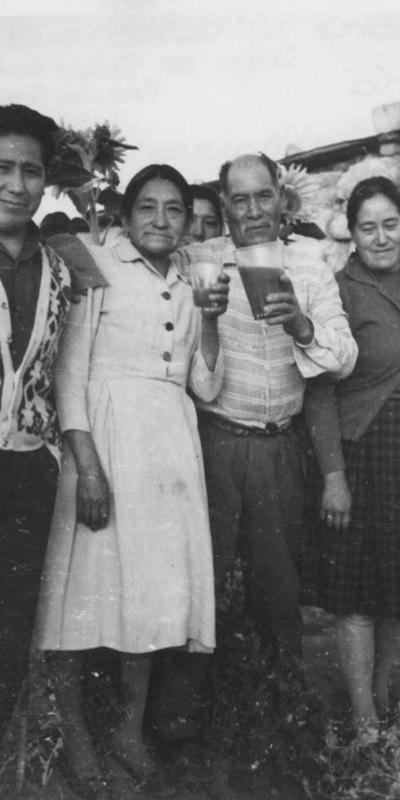
No recuerda exactamente cuándo empezó a cocinar, pero sí sabe que no tendría ni 7 años cuando su mamá abrió la picantería La Nieves en el distrito de Hunter (“junter” o “janter”, para los arequipeños), donde la familia se había mudado años atrás cuando la joven Zoila se casó con un soldado del cuartel de Tingo. Era un día lunes del año 1979.
La pareja procreó 11 hijos, la mayoría hombres. “Mi mamá era chapada a la antigua, como las mamás de antes. No dejaba que mis hermanos hombres cocinaran ni limpiaran. Nosotras teníamos que atenderlos a ellos”, dice.
Tatiana, la penúltima, se pasaba el día viendo lo que su mamá hacía. “Tenía magia en las manos. Cómo picaba. Cómo sazonaba. Cómo lavaba sus mandiles dejándolos blanco-blanquito. Cómo planchaba los manteles para que quedaran prolijitos. Decía que eso era su carta de presentación ante los clientes”, recuerda.
Es una historia muy graciosa. Antiguamente las madrinas tenían la potestad de imponer el nombre del ahijado. Mi mamá viene de una familia de chacareros ‘colorados´ y ella nació muy blanquita, parecía un algodoncito. Entonces la madrina dijo que tenía que llamarse Blanca Nieves y se quedó con Nieves. Cuando muchos años después le hicieron un reportaje salió que su verdadero nombre era Zoila. De ahí viene el dicho “Oye Nieves de dónde zoi la”, con el que se burlaban los conocidos.
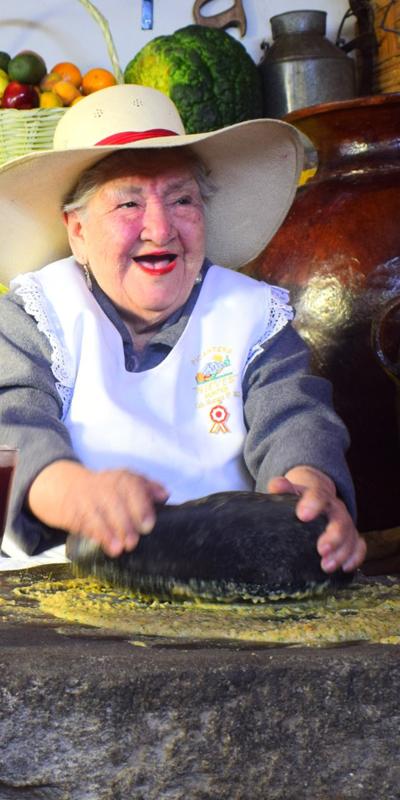
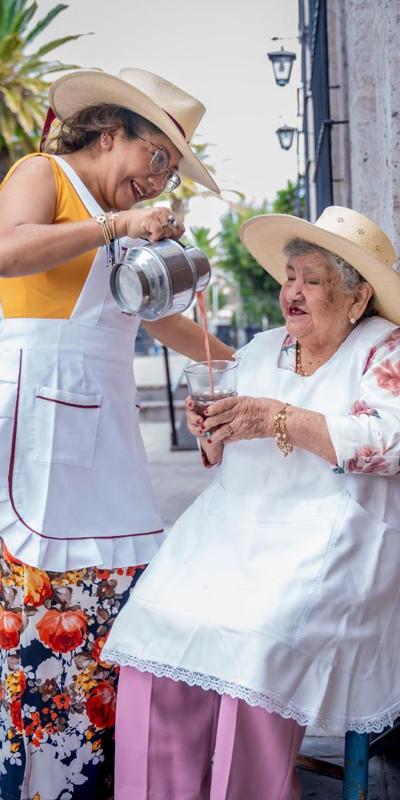
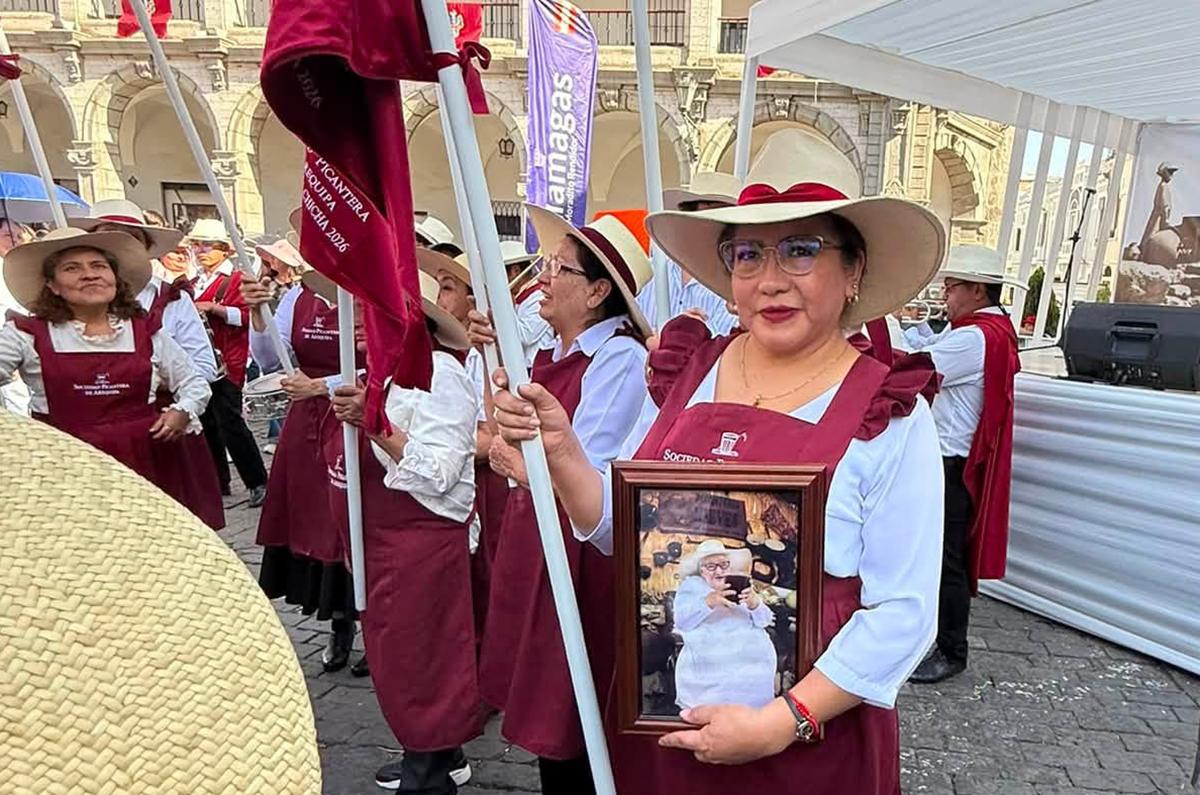
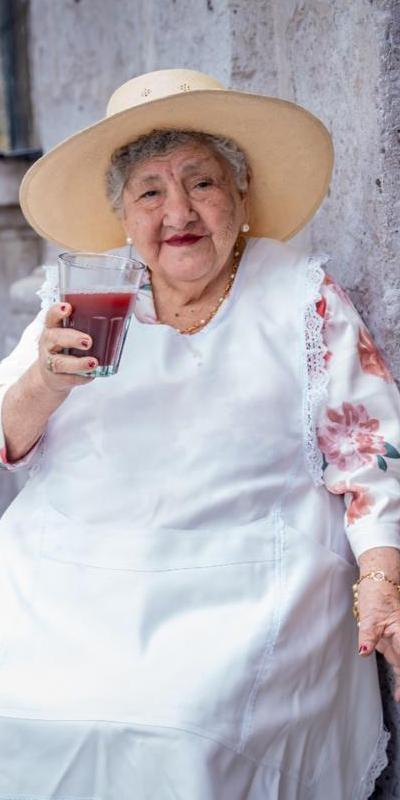
El aprendizaje del recetario picantero fue un proceso natural. Cada día se involucraba más hasta que hace tres décadas se hizo cargo de toda la cocina junto con una de sus hermanas. Sin embargo, doña Zoi-la-Nieves siguió frecuentando diariamente la picantería hasta que falleció el año antepasado. Cualquier comensal podía verla sentada en una mesa lateral con su sombrero de paja, su mandil a flores y su sonrisa maravillosa dando la bienvenida y la despedida a cada uno de los clientes. Doy fe.
La Nieves es una picantería de barrio, los clientes son sobre todo los vecinos de la zona. Saben que desde las 12 m. encontrarán el “almuerzo”. En Arequipa el ‘almuerzo’ consta de un chupe que cambia cada día, inamovible, y un segundo que varía según la temporada. El único chupe que se ofrece también a diario como alternativa y por presión de los comensales es el caldo blanco. En la carta se ofrece un promedio de diez platos diferentes cada día, entre guisos, asados, adobados, estofados y picantes.
En verdad, me gusta trabajar todo, pero mis preferidos son los platos con cuy o conejo como le decimos nosotros. En algunas recetas uso conejo cotuto (viejo), en otros prefiero hembra o conejo joven.
La chalona unos le dicen cecina, es el cordero salado y seco. Yo compro varios kilos de chalona y la guardo con harta sal. Me da sabor, pero no mucho aroma. Es uno de mis ingredientes favoritos para los platos con carne. La chicha es otro ingrediente indispensable. La convertimos en chichagre, y con diferentes fermentaciones se usan en platos distintos. El ajito bien cocido no puede faltar. Igual que el ají colorado cocinado en harto aceite a temperatura alta, pero sin dejar que se queme. La cebolla interviene en muchas preparaciones. No uso cebollita china sino cebolla verde, le decimos tocolo porque solo usamos la colita. Se cosecha a los 15 días del brote, tiene las hojas bien verdes y un sabor un poquito dulce. También usamos muchas hierbas aromáticas. Sin hierbas no hay picantería.
Entendemos la innovación de otra manera. Ya no cocinamos a leña porque no es sostenible. Antes se usaban diferentes tipos de leña, que aportaban aromas diferentes según su origen. Hoy tenemos una cocina sostenible porque usamos técnicas que nos heredaron las abuelas junto con las nuevas técnicas que hemos aprendido. Cocinamos para el día, nada se guarda, con productos de temporada. Eso es innovación. Respetar la receta con los recursos que tiene cada lugar, cada cocina.
By María Elena Cornejo (IG @melenacornejo)
Tatiana Villavicencio’s earliest memory is the smell of chicha rising from the chombas that her grandmother, Evarista Gutiérrez Postigo, kept at her picantería, La Evarista de Sachaca. As a child, Tatiana liked to stick her entire head inside the earthenware jars to breathe in their aromas. Like all daughters of picantería cooks, Tatiana opened her eyes to the almost perpetual fire of the wood-burning stove, where broths had been simmering since the early hours of the morning. She did not play with dolls, but gathered eggs from the henhouse, chased guinea pigs and fed the animals grazing on the farm.
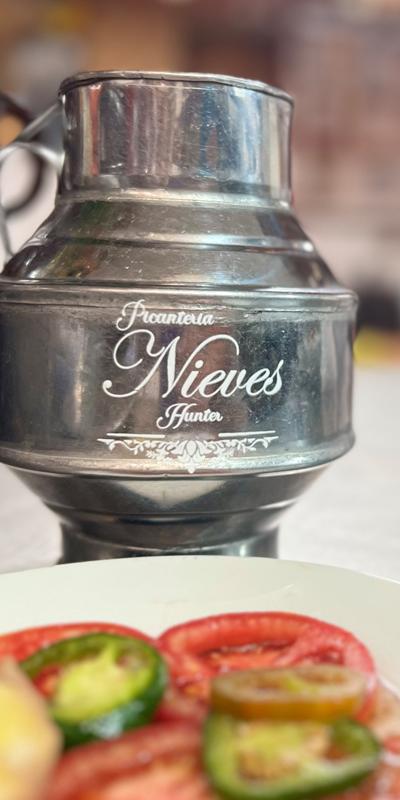
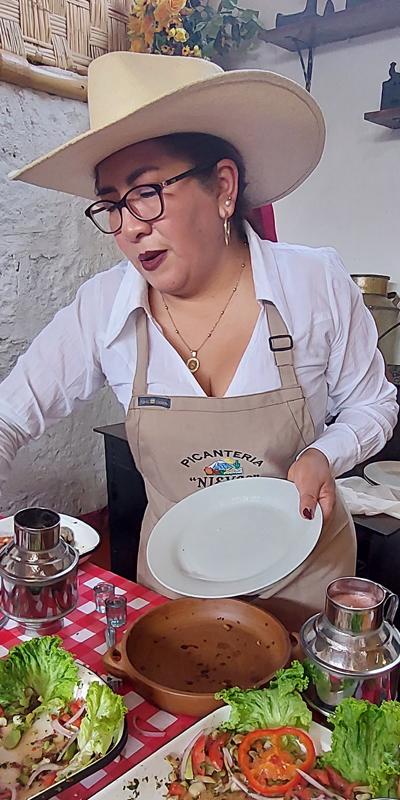
She does not remember exactly when she began cooking, but she does know that she could not have been more than seven years old when her mother opened La Nieves picantería in the district of Hunter (“junter” or “janter,” as the people of Arequipa pronounce it), where the family had moved years earlier after the young Zoila married a soldier stationed at the Tingo barracks. It was a Monday in 1979.
The couple had 11 children, most of them boys. “My mother was very old-fashioned, like mothers used to be. She would not let my brothers cook or clean. We had to wait on them,” she says.
Tatiana, the second youngest, spent her days watching everything her mother did. “She had magic in her hands. The way she chopped. The way she seasoned. The way she washed her aprons until they were perfectly white. The way she ironed the tablecloths so they looked immaculate. She used to say that was her calling card for customers,” she recalls.
It is a very funny story. In the old days, godmothers had the authority to choose their godchildren’s names. My mother came from a family of ruddy-skinned farmers, but she was born very fair, like a little ball of cotton. So her godmother said she had to be called Blanca Nieves, and Nieves stuck. Many years later, when a story was published about her, it revealed that her real name was Zoila. That is where the saying “Oye, Nieves, ¿de dónde zoi la?” came from, which acquaintances used to tease her.
Learning the picantería repertoire was a natural process. She became more involved each day until, three decades ago, she took charge of the entire kitchen alongside one of her sisters. Nevertheless, Doña Zoi-la-Nieves continued visiting the picantería every day until she passed away two years ago. Diners could always see her seated at a table off to one side, wearing her straw hat, her floral apron and her wonderful smile, welcoming and saying goodbye to every customer. I can attest to that.
La Nieves is a neighborhood picantería whose customers are mainly local residents. They know that from noon onward they will find the “almuerzo.” In Arequipa, the almuerzo consists of a chupe that changes according to a fixed daily schedule and a main course that varies with the season. The only chupe also offered every day as an alternative—at the insistence of customers—is caldo blanco. The menu features an average of ten different dishes each day, including stews, roasts, marinated dishes and spicy preparations.
Honestly, I enjoy working with everything, but my favorites are dishes made with cuy—or conejo, as we call it. For some recipes, I use conejo cotuto, an older animal; for others, I prefer a female or a younger one.
Chalona—some people call it cecina—is salted, dried lamb. I buy several kilos of chalona and preserve it with plenty of salt. It gives flavor, but not too much aroma. It is one of my favorite ingredients for meat dishes. Chicha is another essential ingredient. We turn it into chichagre, and different fermentations are used for different dishes. Garlic, thoroughly cooked, is indispensable. So is ají colorado, cooked in plenty of oil at a high temperature without allowing it to burn. Onion is used in many preparations. I do not use scallions, but green onions; we call it tocolo because we use only the tail end. It is harvested 15 days after sprouting, has deep green leaves and a slightly sweet flavor. We also use many aromatic herbs. Without herbs, there is no picantería.
We understand innovation differently. We no longer cook over firewood because it is not sustainable. In the past, different types of wood were used, each contributing different aromas depending on its origin. Today, our kitchen is sustainable because we combine techniques inherited from our grandmothers with the new techniques we have learned. We cook for the day; nothing is stored, and we use seasonal products. That is innovation: respecting the recipe while working with the resources available in each place, in each kitchen.

En el corazón de São Paulo, una ciudad activa y bulliciosa, se esconde este palacio, un refugio natural de paz y comfort.
Leer más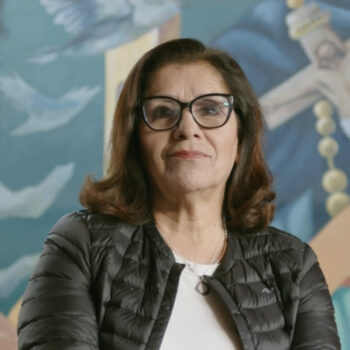
Conversamos con la gestora cultural, promotora de la cocina regional tacneña y miembro fundador del Patronato Gastronómico de Tacna.
Leer más
Un hotel con la ubicación perfecta, entre el mar y el desierto, para disfrutar de un fin de semana sin preocupaciones priorizando el descanso.
Leer más




Cada semana recibirás diversos artículos interesantes sobre gastronomía.
 Regresar


