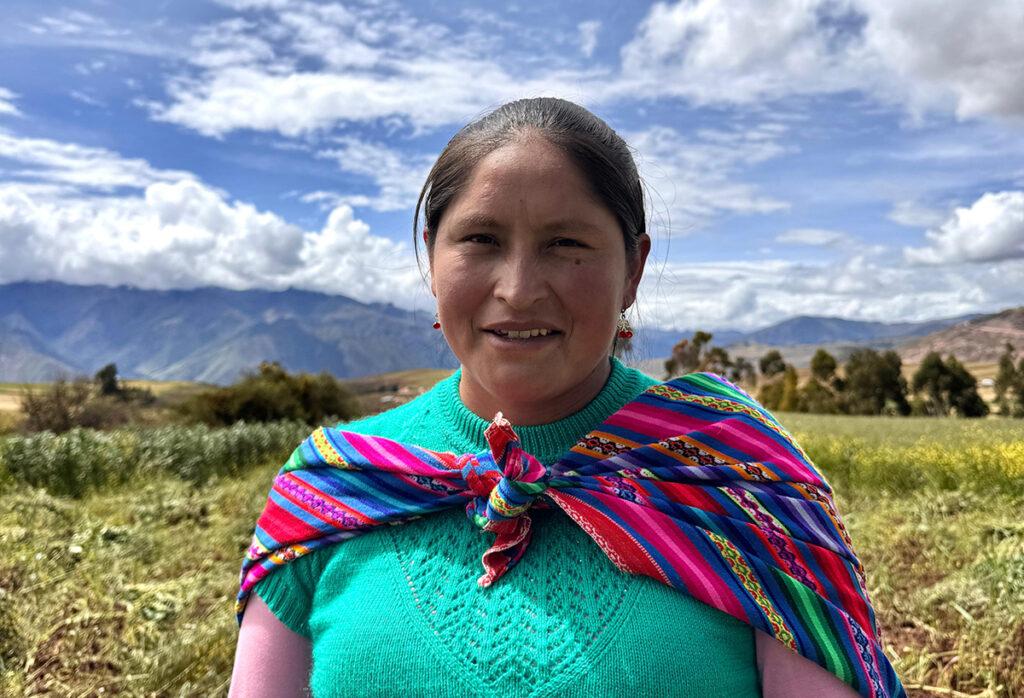
YOVANA JUÁREZ LLANO: CHICHA Y PAPAS NATIVAS PARA CELEBRAR
Es artesana, agricultora, maestra chichera y presidenta de una asociación que impulsa el trabajo de mujeres en su comunidad cusqueña.


Es artesana, agricultora, maestra chichera y presidenta de una asociación que impulsa el trabajo de mujeres en su comunidad cusqueña.
Escribe Catherine Contreras (IG @caty.contrerasr)
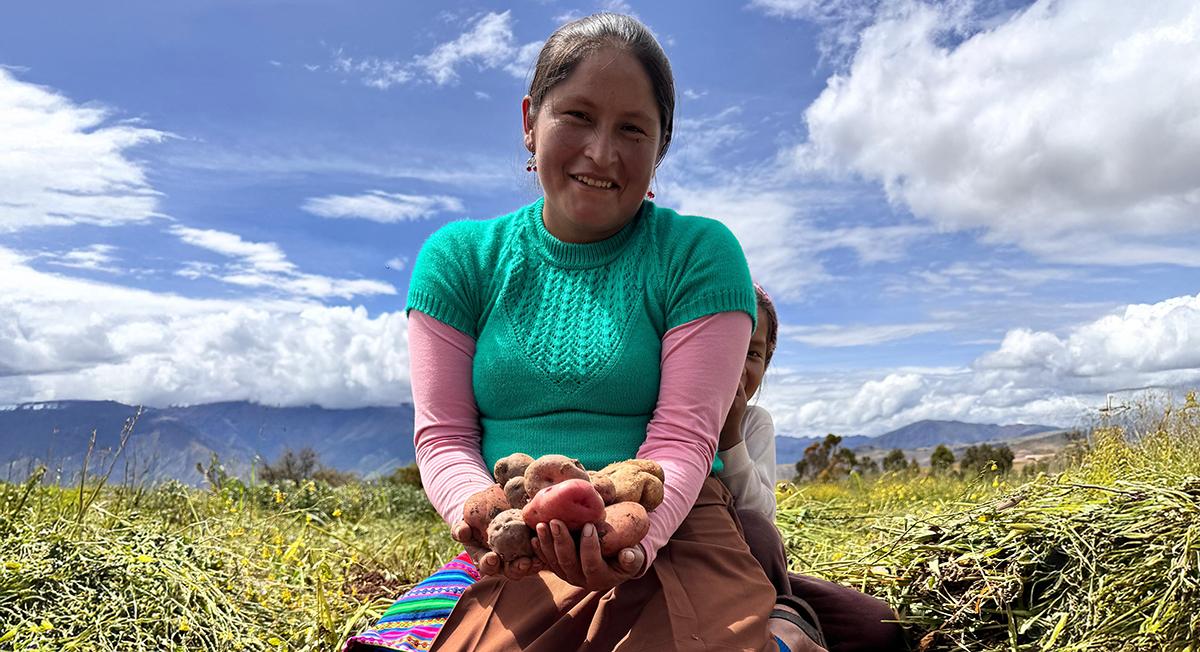
Tiene 33 años y vive en la comunidad campesina de Mullak’as Misminay, muy cerca del centro arqueológico de Moray, en Cusco. Es líder de una asociación de artesanas y es maestra sabedora de los procesos de la chicha de jora, bebida ancestral que bendice momentos especiales y que acompaña esa huatia que celebra uno de los tesoros de la pachamama: las papas nativas. En esta temporada, Yovana y su comunidad celebra con chicha y papitas.
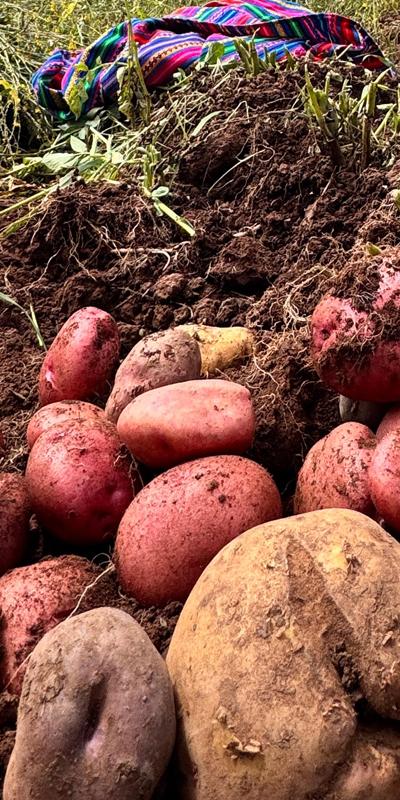
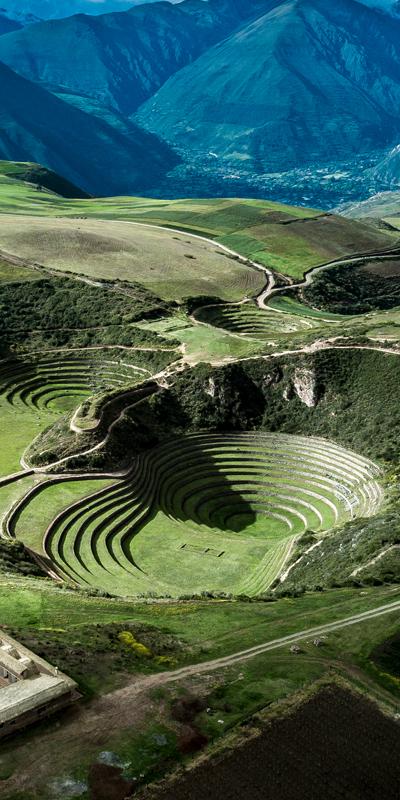
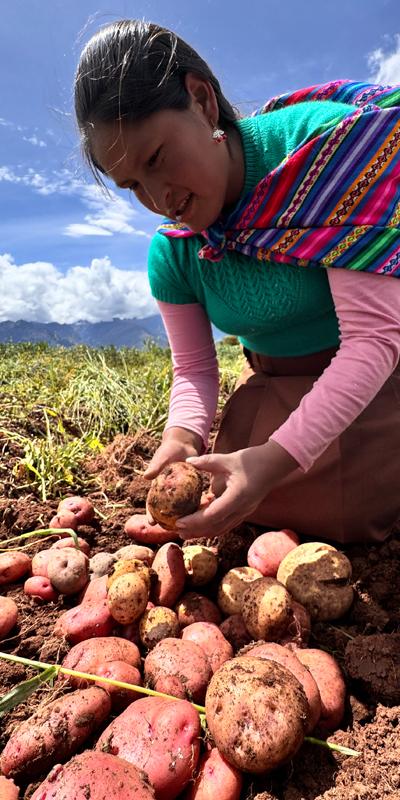
Bajo el influjo del nevado tutelar Chicón, Yovana trabaja cada día la tierra y la bebida. Hace diez años que vive en el sector de Anccoto, en la comunidad campesina de Mullak’as Misminay, distrito de Maras, provincia de Urubamba. Está camino al centro arqueológico Moray, uno de los destinos del turismo en Cusco. Es artesana, agricultora y maestra chichera. Hace tres años formó una asociación que llamó Riqch’ary Ch’aska (Despierta estrella), y que está formada por 24 socias que como ella trabajan para mantener a sus familias y mejorar la economía de su comunidad.
“Mis compañeras son jóvenes que vinieron a vivir acá, aprendieron y somos tromes haciendo la chicha”, nos dice con orgullo. Preparan esta bebida sagrada, que venden en su comunidad, con maíz que ellos mismos cultivan. La lluvia es su mejor aliado para que en la tierra fértil de Moray brote el maíz que luego cosechan, remojan los granos, lo dejan fermentar, lo secan, muelen y hacen hervir para obtener la bebida que se comparte en momentos especiales, desde bautizos hasta carnavales.
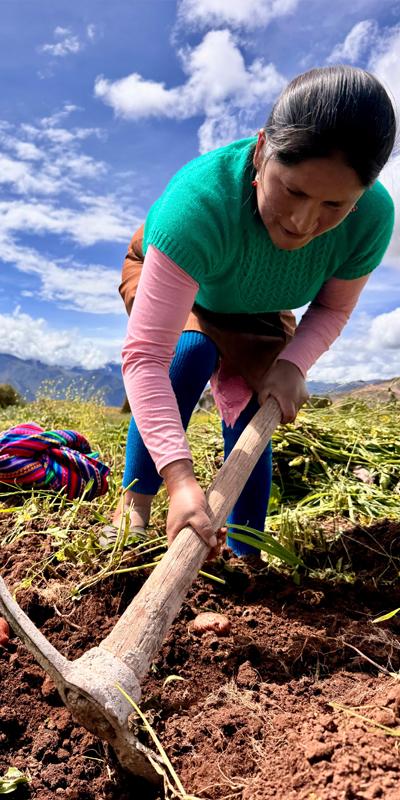
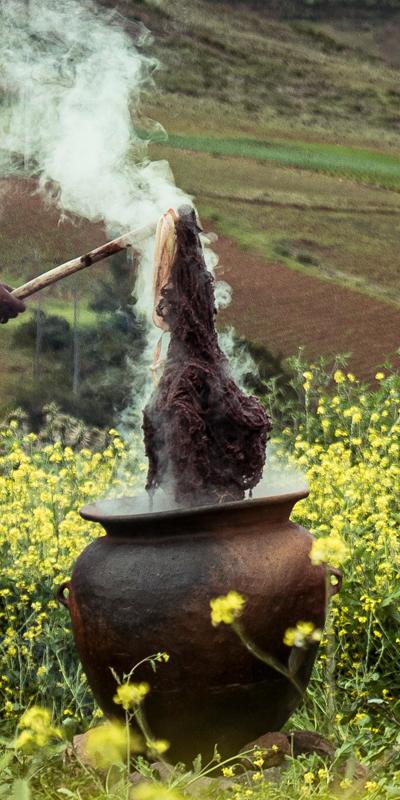
La chicha representa su mayor ingreso junto con la artesanía. Yovana dice que desde que llegó el restaurante MIL a Moray, han aprendido a hacer bordados y teñidos combinando hierbas con las que obtienen hermosos colores para hacer cartucheras para ellos. Pero hay otro tesoro que Yovana y su familia también producen: papas nativas. “Cultivamos maíz, cebada, habas y también papa en un lugar un poco lejos. Tenemos como 300 variedades, aunque es difícil de llevarlas para el mercado, por eso solo produzco para el consumo local, para comidas típicas que también vendemos. Porque es barato el precio de la papa”. Muy barato, recalca Yovana, y nos confiesa que lo que les pagarían en el mercado no corresponde con el esfuerzo que representa la cosecha: “No es solo poner la semilla, es ver si hay mala yerba y sacarla, es hacer la primera y segunda lampada”. Es trabajo duro cultivar tubérculos, y aun así Yovana y su familia siguen cultivando papas blanca y cica (la morada, más comercial), además de compis, huayro, maqtillo, peruanita, camotillo y la famosa papa piña, aquella tan difícil de pelar que, según la costumbre andina, se las dan como reto a las mujeres para saber si serán esposas pacientes.
Como lideresa en su comunidad, Yovana marca el rumbo, enseña y comparte. La chicha la sustenta, la papa la alimenta y los Apus la cobijan y protegen para continuar en su labor.
Words by Catherine Contreras (IG @caty.contrerasr)
She is 33 years old and lives in the rural community of Mullak’as Misminay, very close to the archaeological site of Moray, in Cusco. She leads an association of artisans and is a knowledgeable master of the processes behind chicha de jora, an ancestral drink that blesses special moments and accompanies the huatia that celebrates one of Pachamama’s treasures: native potatoes. This season, Yovana and her community celebrate with chicha and little potatoes.
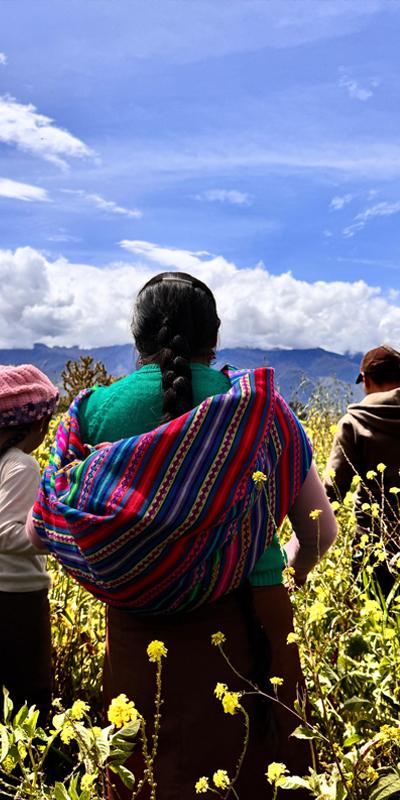
Under the influence of the protective snow-capped Chicón mountain, Yovana works the land and the drink every day. She has lived for ten years in the Anccoto sector, in the rural community of Mullak’as Misminay, district of Maras, province of Urubamba. It is located on the way to the Moray archaeological site, one of Cusco’s tourism destinations. She is an artisan, farmer, and master chicha maker. Three years ago, she formed an association called Riqch’ary Ch’aska, which means “Awaken, Star,” made up of 24 women members who, like her, work to support their families and improve the economy of their community.
“My companions are young women who came to live here, learned, and now we are real pros at making chicha,” she says proudly. They prepare this sacred drink, which they sell in their community, using corn they grow themselves. Rain is their greatest ally, allowing corn to sprout in the fertile soil of Moray. They later harvest it, soak the kernels, let them ferment, dry them, grind them, and boil them to obtain the drink shared during special moments, from baptisms to carnivals.
Chicha represents her main source of income, together with handicrafts. Yovana says that since the restaurant MIL arrived in Moray, they have learned to embroider and dye fabrics, combining herbs to obtain beautiful colors used to make pencil cases for them. But there is another treasure that Yovana and her family also produce: native potatoes.“We grow corn, barley, broad beans, and also potatoes in a place a little farther away. We have around 300 varieties, although it is difficult to take them to market, so I only produce them for local consumption, for typical dishes that we also sell. Because the price of potatoes is low.”
Very low, Yovana emphasizes, confiding that what they would be paid at the market does not reflect the effort involved in harvesting them: “It is not just about planting the seed. You have to see if there are weeds and remove them; you have to do the first and second hoeing.” Growing tubers is hard work, and yet Yovana and her family continue to cultivate white and cica potatoes, the purple one, which is more commercial, as well as compis, huayro, maqtillo, peruanita, camotillo, and the famous papa piña, a potato so difficult to peel that, according to Andean custom, it is given as a challenge to women to see whether they will make patient wives.
As a leader in her community, Yovana sets the course, teaches, and shares. Chicha sustains her, potatoes nourish her, and the Apus shelter and protect her so she can continue her work.
Conversamos Angie Máquez en su restaurante de Surquillo y nos compartió algunos de sus lugares favoritos para comer en el Callao.
Leer más
El chef del restaurante mexicano Fauna, en el estado de Baja California, nos recomendó sus restaurantes favoritos.
Leer más
El chef del restaurante Maito, que es referente de la gastronomía panameña, nos comparte sus cinco lugares favoritos para comer en su país.
Leer más




Cada semana recibirás diversos artículos interesantes sobre gastronomía.
 Regresar


